Superior construction – 316 Stainless with non-conductive materials
No Planned Obsolescence – Service Life +20 years
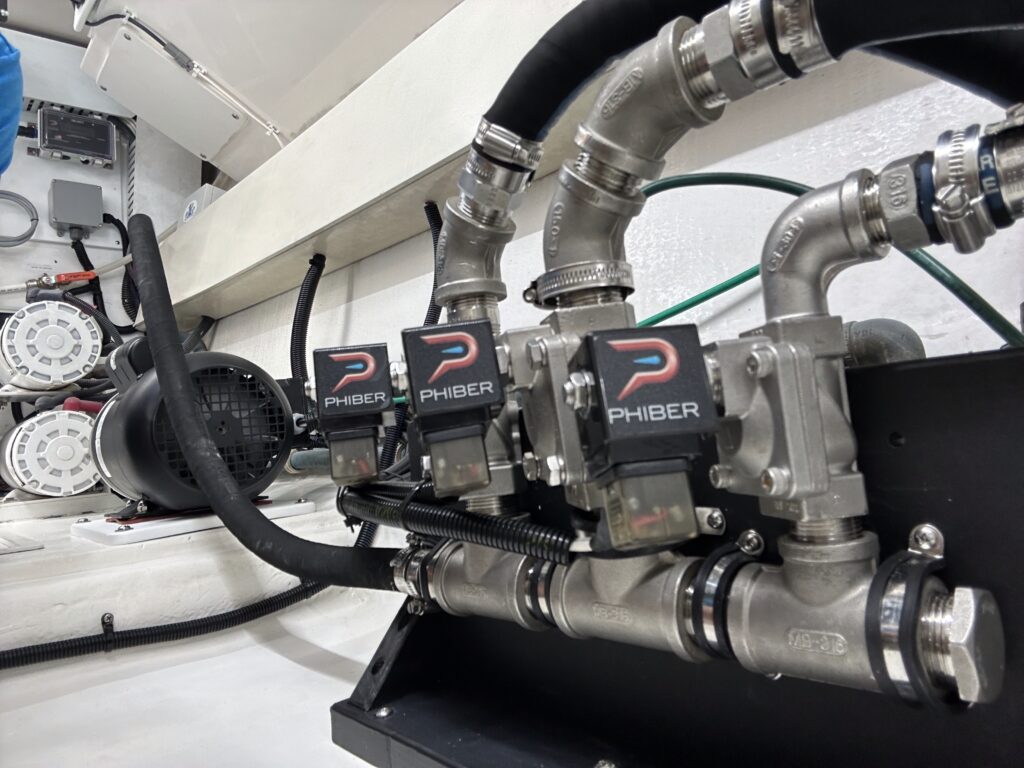
Aggregate components allow for creative and minimal installation footprint
Engineered design ensures safety and integrity of potable water systems
Meets ABYC Standards H23.5.1 for operation
FUNCTIONAL OVERVIEW
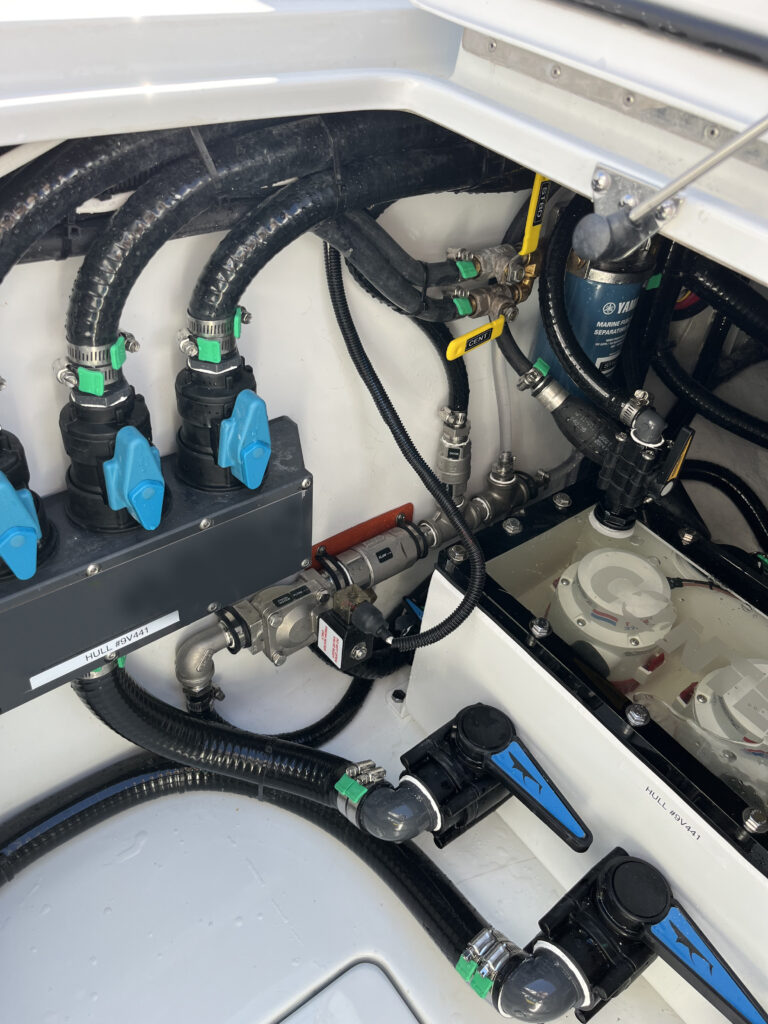
Per ABYC Standards (H23.5.1), a failsafe barrier must be installed in any connection between a vessel’s potable water system and a raw water network. All PHIBER FWF Manifolds use a Patent-Pending Hydrostatic Lock for compliance.
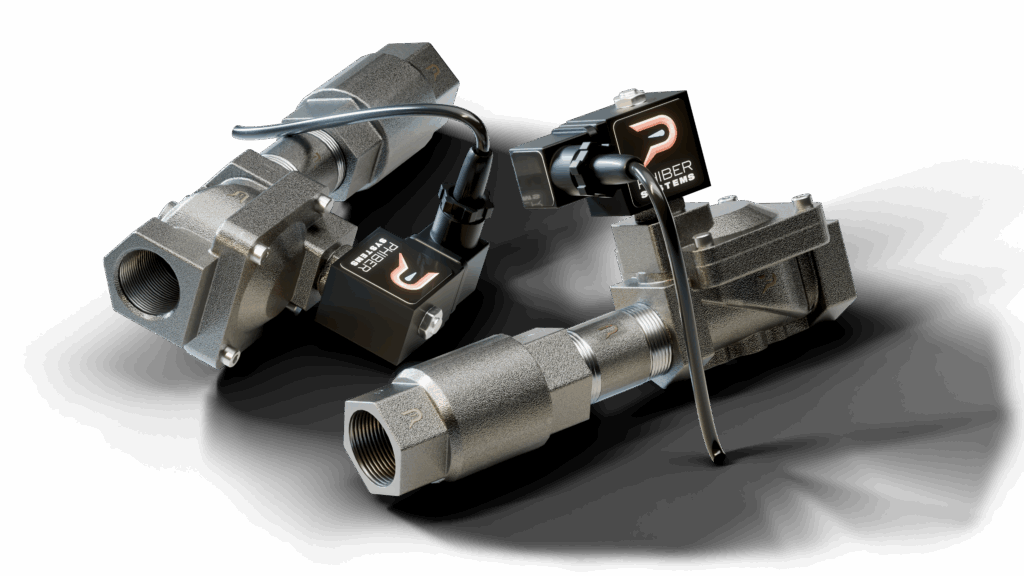
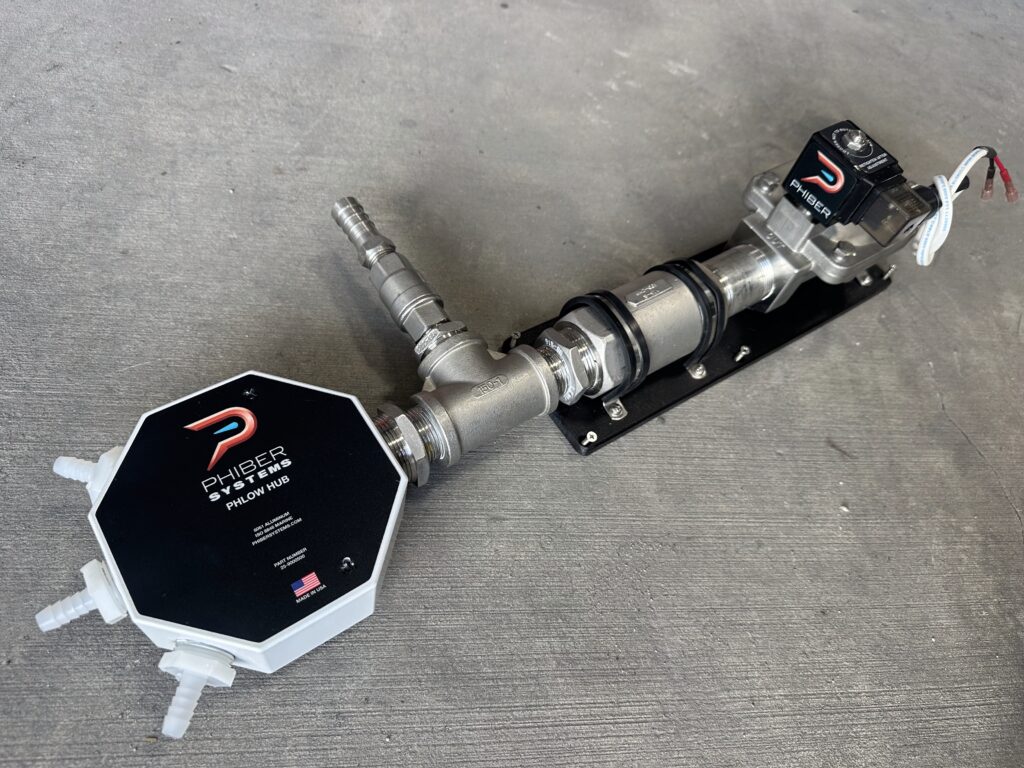
PHIBER Systems’ Patent-Pending Hydrostatic Lock is a directional flow-control device comprised of proprietary components that create an impermeable barrier between the Fresh and Seawater systems when it is closed. It can only be opened via commands from the Control Module.
Hydrostatic Locks serve two purposes in the PHIBER System:
allow a prescribed flow (GPM) of fluid (water) only in one direction when open
serve as the “barrier/gate” between two different fluid networks when closed
Traditional checks and flow controls rely on springs, plungers or gates that can be manipulated via upstream or downstream pressure differentials.
Hydrostatic Locks use THREE distinct components to establish a barrier that can only be unlocked or breached through an intentional (controlled) process.
A unique “Primary Gate” that can be opened or closed at specific intervals via signal from the Control Module, regardless of conditions (pressures) upstream or downstream of the Lock.
A unique “Spring Check” that only opens in response to pressure upstream of its internal ball-valve, allowing water/fluid to only flow in one direction. The Primary Gate must open for the Check Valve to open.
A “Locking Chamber” between the Primary Gate and the Spring Check that traps water between the Gate and the Check when the Primary Gate is closed. Once water is “locked” in the chamber, it prevents both upstream and downstream pressures from breaching either the Primary Gate or the Spring Check.
PHYSICS AT WORK
In any PHIBER System, fresh water will only flow in one direction: from a freshwater system INTO a seawater system.
Water is not compressible, nor can it be stretched, so when it is trapped between two points, a condition called a “Hydrostatic Lock” occurs. Pressure or suction at either end of the Lock has NO effect.
FLOW CONTROL = PROPER SIZING
The Hydrostatic Lock is a flow-control device that must be sized properly to ensure proper water flow (GPM) for a particular flushing application. Generally, only ONE Hydrostatic Lock will be used with a particular PHIBER System’s Control Module.